Master in Stage Design and Art Direction
Discover the creative world behind any audiovisual or stage production and become a professional in the design of spaces for film, advertising and live arts.
Description of the curriculum
- Edition: 1st
- Teaching period: from October 2024 to June 2025. Final master's project presentation: June 2025
- Schedule: Monday to Thursday from 4 p.m. to 7 p.m.
- Modality: on-site
- Language: Spanish
- Price: 9.500 €
- Qualification: Master's Degree in Interior Design awarded by the UVic-UCC
- Credits: 60 ECTS
Presentation
The Master in Stage Space Design and Artistic Direction hybridises two roles that are nourished by the same essence:
the dramaturgy of space.
From this root are derived the various areas of specialisation that we find in the world of theatre, dance, cinema, advertising, and events.
We offer you the tools you need to lead an art department and the technical knowledge you will require to design and carry out a set. We will analyse the evolution of the role of the set designer and research the history of theatre and the audiovisual world through the present, adopting a critical and innovative perspective.
The program offers a number of practical workshops as capsules of inspiration taught by creators, artists, and well-known professionals from the sector. In these workshops, you will be able to compare methodologies, discover new areas of specialisation, and find your own benchmarks.
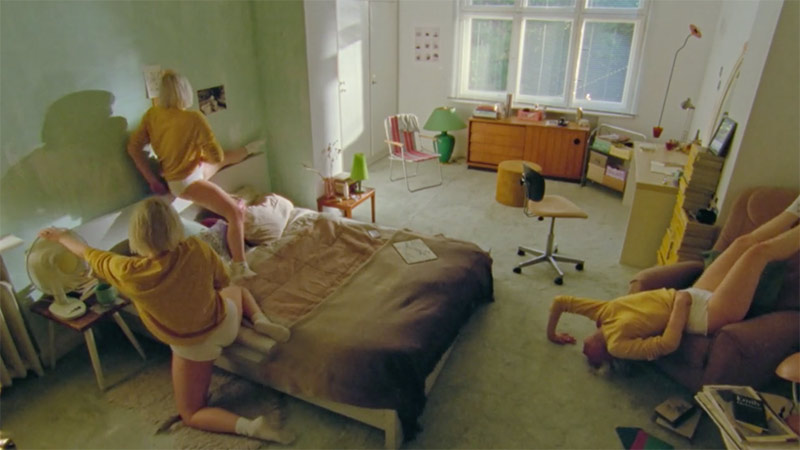
During the Master's Degree program you will come across different types of projects, in which you will go through the phases of the creative process: an analysis of the text in scenographic code, the development of the concept, graphic representation, and implantation in the space, among others. At the end of the program, students will make a music video in collaboration with a musical artist. For this clip, we will make different life-sized sets (exterior, interior, and abstract), experiencing the roles played by the art department in a professional shoot: artistic director, prop maker, on-set dresser, and set decorator, among others.
The objective of the Master's degree is to develop high-quality projects and culminate with the creation of a portfolio that reflects the creative identity of each student, which is ideal as a presentation letter in the labour market.
Syllabus
Module 1 - Scenographic and audio-visual contexts

Module 2 - Graphic representation techniques

Module 3 - Workshops

Module 4 - Projects

Module 5  - TFM: Making of the video clip
Programme
Module 1 - Scenographic and audio-visual contexts
This module explores the historical origins of set design, tracing a map of relationships between the current theatrical context and its evolution throughout its various stages. We provide a solid basis for the interpretation of images and the consolidation of unique benchmarks, as well as a critical view of the history of cinema and artistic direction.
The practical approach takes shape in research and in the scenic laboratory, where students can experience and explore different non-textual scenic formats guided by different creators. We will learn creative techniques for building creative universes such as world building, a process for the imaginative construction of environments and universes.
- Visits to the main theatres in the city; historical-social context research.
- Critical review of the collective cinematic imaginary: references and gender gaps, class and race.
- Live communication, imagination, and professional identity of the artistic director.
- The development of techniques for creating worlds for fiction.
- A scenic creation laboratory: living bodies in space, compositional perception and site specific.
Module 2 - Graphic representation techniques
The program focuses on providing students with the essential tools to effectively express concepts and ideas through graphic representations in order to deliver the project to the client, the director, or the rest of the creative team.
We also open our eyes to new visual representation techniques, so that we can positively incorporate the technological advances that are constantly becoming available on the market.
- The application of new technologies in set design, such as the creation of images using artificial intelligence.
- The use of tools for 3D graphic representation (AutoCAD, Sketchup).
- The post-processing of images with Photoshop/Procreate.
- An improvement in freehand drawing techniques to draw quick sketches.
Module 3 - Workshops
The objective of the program is to provide students with a specific vision of various profiles, work methodologies, and specialties through interaction with renowned experts and professionals in the sector. The workshop is held over four consecutive days, at least once a month over the course of the program.
- Workshop I as artistic material with Marta Pazos
- Workshop on art direction with Antoni Castells
- Workshop on costume design and characterisation with Xènia Gasull
- Workshop on the dramaturgy of light with Andrés Galián
- Workshop on still life
- Workshop on ephemeral set and exhibition design with Christine Hartwig
- Workshop on prop making with Simon Weisse
- Workshop on the construction of decorations and patinas con Juan Carmona
Module 4 - Projects
This individual work module consists of two projects:theatrical and cinematographic, that will encompass all stages of the creative and pre-production process based on a theatrical text and a script, respectively.
Over the course of the project, we will endeavour to defend a solid conceptual and formal proposal that takes account of specific management and production guidelines. The concept will be explored and the project developed in greater depth through personalised tutorials.
- Analysis of the work/script in scenographic code
- The development of a concept, a storyboard and a moodboard
- Effective communication with the artistic and technical team
- Selection of, and search for, props and materials
- Item budgeting
- The execution of plans for implementation and construction
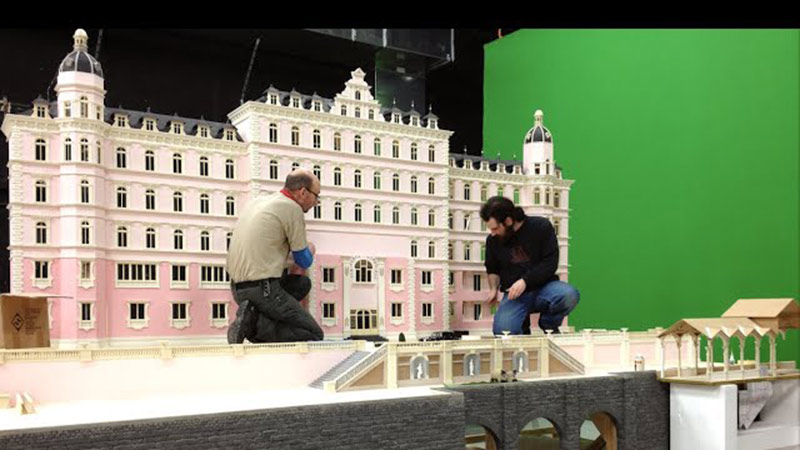
- The rendering of a physical and/or virtual mock-up
Module 5 - Making of the video clip
The Final Master project brings together all of the content taught in the program, and is a way to explore the terrain of a filming in full action.
In the TFM, we will work on a project aimed at filming a video clip for an active musical artist. Students will work in groups, with diversified roles and specific responsibilities of an art department. Teamwork will be key to this module, where we will build three full-scale sets, learn to manage real timings and budgets, and face the challenge of filming on a set in collaboration with a technical film crew.
Teachers
Coordinator
Miren Oller Rossell
Art director and set designer
Coordinator
Clàudia Vilà Peremiquel
Set designer and scenic artist
Miren Oller Rossell
Art director and set designer
Clàudia Vilà Peremiquel
Set designer and scenic artist
Antoni Castells Zamora
Art director and builder
Giuliana Colaneri
Architect and scenic artist
Cube.bz
Lighting and set designers
Christine Hartwig Monte
Concept of design and sustainability in set design
Gala Hernández López
Artist and film-maker
Marcos Morau
Stage director and choreographer. Director of La Veronal
Ricardo Orts Conejero
Architect and digital artist. Specialist in AI
Marta Pazos
Stage director, set designer, and visual artist
Igor Sarralde
Illustrator and cartoonist
Andrés Galián
Scenic artist and lighting designer
Xènia Gasull
Costume designer specialising in cinema
Rosa Tharrats Oliva
Multidisciplinary artist and costume designer
Txalo Toloza
Performer and video artist. Specialist in documentaries
Simon Weisse
Visual effects miniature unit supervisor and props designer
Danidevito Studio
Studio specialised in set and product design
Career opportunities
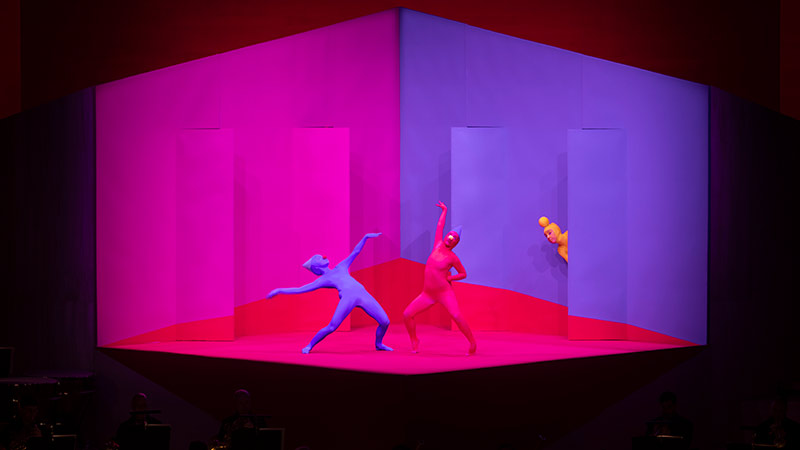
- Set design for the performing arts: theatre, dance, opera, the circus.
- Ephemeral set and exhibition design.
- Costume design
- Still-life design.
- Set designer for product or fashion photography.
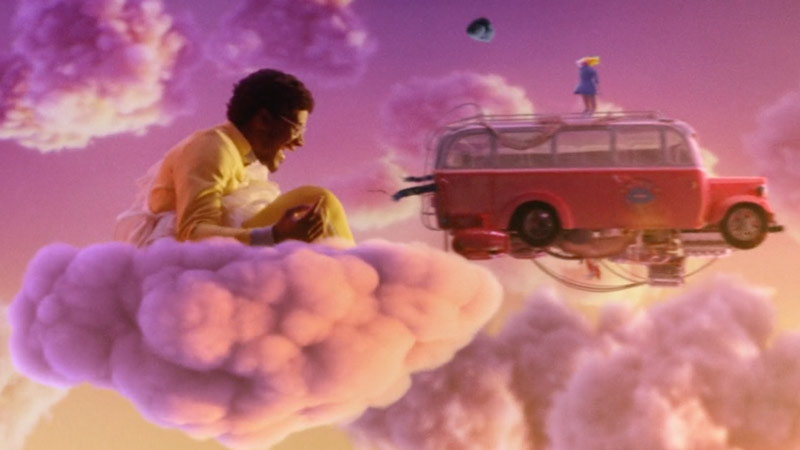
- Art direction for advertising and video clips.
- Art direction for films
- Other roles in the art department include: art assistant, prop buyer, prop maker, prop master, set decorator, set dresser, on-set dresser, patina painters, and builders, among others.
Payment methods
Total cost of the course: 9.500 €
The total cost includes an amount of 200 € concerning the university fees, the administration expenses and the compulsory insurances.
Payment methods
BAU, Arts and Design College of Barcelona offers different terms of payment:
-
Single payment
- Part payment, in 3 instalments:
- 1st payment, due on enrolment: consisting of 40% of the fees excluding taxes. An amount of 200 € concerning the university fees is added to the resulting cost
- 2nd payment, due November 5: consisting of 30% of the course excluding taxes
- 3rd payment, due January 5: consisting of 30% of the course excluding taxes
Students and former students of BAU benefit from 10% discount on any of the courses if they have exceeded at least 50% of the credits for a Degree, Higher Degree in Design or the Diploma in Graphic Design; or 100% of the credits for any of the Master’s or Postgraduate degrees.
More information about scholarships and grants.
Information about the registration process.
Academic regulations for Masters and Postgraduate Degrees of BAU.
Download the brochure
Enter your details and we will send you an email with the Master in Stage Design and Art Direction brochure.